
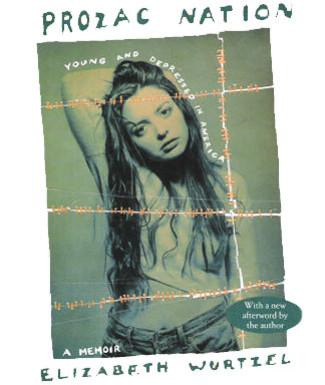
Title: Prozac Nation
Author: Elizabeth Wurtzel
Warning: The following information should be considered before reading this book:
#1. This book is a memoir; all memoirs are by their very nature, self-indulgent.
#2. This memoir dives deep into depression and drug use, making it, if anything, even more self-indulgent than your average memoir.
That being said, I’ve realized I’m not a fan of this type of memoir. I prefer reading about my favorite famous personalities or even the occasionally intriguing public figure from history where I can voyeuristically peek into their lives without feeling weighed down by the intensity of their personal struggles.
I’m not particularly drawn to confessional life stories that leave me feeling grateful for my own life and sobriety. For me, reading should be both enjoyable and informative. Even better, I need to connect with or like the character. In this case, the author’s self-destructive journey felt repetitive, and I found it difficult to stay engaged. If the narrator or protagonist isn’t particularly likable, the story itself needs to be exceptionally compelling, otherwise, it can feel like a struggle to continue.
Her story made it easy to dislike her, and the focus on her childhood struggles and family issues was often overshadowed by the way she systematically alienated her friends. I’m not suggesting that her struggles weren’t real or that depression isn’t debilitating—both are very real and serious—but after reading this book and another with a similar focus, I’ve realized that this type of memoir isn’t compelling to me. I likely wouldn’t choose to read another story in this vein.
Overview:
The story begins with Elizabeth “Lizzie” Wurtzel as a 19-year-old, accepted on scholarship to Harvard to study journalism. Raised by her mother after her parents’ divorce when she was two, Lizzie spent her childhood and early adulthood longing for her absent father, a longing that heavily contributed to her depression. Her relationship with her mother was also strained, marked by a lack of communication.
At Harvard, Lizzie systematically alienates the few friends she makes, through her behavior, humiliation, and the effects of her depression and substance abuse. Despite her immense talent as a writer, she becomes trapped in a vicious cycle of drugs and mental health struggles, threatening her promising literary career.
With the guidance of her psychiatrist, Lizzie begins to confront her issues, work through her depression, get clean, and ultimately rebuild her life, culminating in the writing of this very book.
What I like about it:
I can’t say there was much about the story that I personally “liked,” but I will say it was very well written. If the author were to write something more relatable and focused on the story rather than personal struggles, I would definitely consider reading it.
What I didn’t like about it:
Reading this book was really a discovery for me, it helped me clarify the kind of memoirs I enjoy and the ones I don’t. Unfortunately, this one fell into the latter category. Would I recommend it? It really depends. I would need to ask a potential reader a few questions before deciding whether it’s a good fit for them.
I give this book 2 out of 5 stars – **
If you decide to read this book after my review, I hope you enjoy it—and that I haven’t swayed your expectations!
XoXo your favorite Book Mistress,
Zen ❤
 mistress Zen
Leave a comment